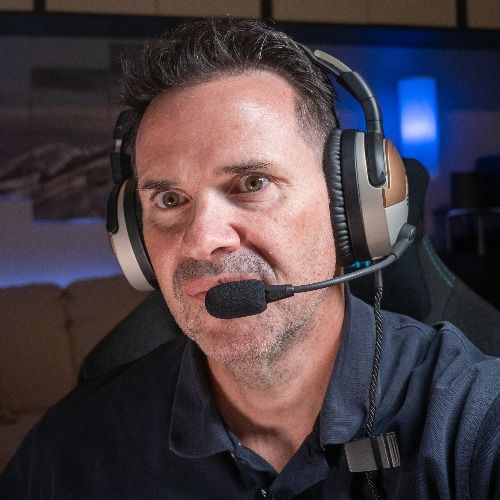
Episode 100
SPC100 [CS] Creamy Yogurt — Landings Then and Now
Eighteen years ago, I was a student pilot with a recorder plugged into my headset, learning to land in front of the world. For Episode 100, I went back to those original recordings.
You'll hear the cockpit audio from my own training landings in 2008, what I said about them on the show back then, and what I hear in them now as a CFI. There's the herky-jerky on final, the skipper, the flat landings, my first solo, a 16-knot crosswind, and my instructors saying the same few things over and over.
Then we flip it. I take you along on a landing lesson with my student Cole at Falcon Field, and you'll hear me say a lot of those same things from the right seat. You'll also hear the lesson that mattered most that morning, and it had nothing to do with the flare.
In between is the episode I've wanted to make for years: how not to bounce a landing. We cover the stabilized approach and why I now expect a go-around on every landing, then the roundout, the flare, and why you hold the airplane, not the yoke.
What's your first-solo landing story? Tell me at studentpilotcast.com/radiocheck.
Links:
- Radio Check (leave me a voicemail): https://studentpilotcast.com/radiocheck
- The Friday Flight Brief newsletter: https://studentpilotcast.com/flightbrief/
- All episodes: https://studentpilotcast.com/episodes/
- COPA, Operation Zero Ep. 3 (the stabilized-approach video I mention): https://www.youtube.com/watch?v=ks67TD7aSqU
- COPA, "Are You Stable?" (stabilized-approach criteria): https://cirruspilots.org/Publications/Articles/are-you-stable
Hope you enjoy the episode and thanks for listening! Visit the SPC website at https://studentpilotcast.com. Please keep the feedback coming. You can use the contact form on the website or send email to bill at student pilot cast dot com. The theme song for our episodes is "To Be an Angel" by the band, "Uncle Seth".
Legal Notice: Remember, any instruction that you hear in this podcast was meant for the student and only for the situation that they happened to be in at the time. Please do not try to apply anything you see or hear in this episode or any other episode to your own flying. If you have questions about any aspect of your flying, please consult a qualified CFI.
Copyright 2008-2026, studentpilotcast.com and Bill Williams
Transcript
Just think smooth thoughts
Speaker:Creamy yogurt
Speaker:There you go.
Speaker:Barry White-type landing.
Speaker:Oh, yeah.
Speaker:Oh, yeah.
Speaker:That's it, man
Speaker:That's me, 2008, about seven hours into my flight training With a
Speaker:substitute instructor talking me down final in his best Barry White voice.
Speaker:18 years and 100 episodes later, I'm the one in the right seat now, and it turns
Speaker:out I'm saying a lot of the same things.
Speaker:Let's find out what changed and what didn't in this very special
Speaker:episode 100 of the Student Pilot Cast, Landings Then and Now.
Speaker:Welcome back to the Student Pilot Cast, and welcome to episode 100.
Speaker:I started this show in March of 2008.
Speaker:Episode zero was called Kicking It Off, and the description said it was
Speaker:about, quote, "A regular guy getting his private pilot certificate."
Speaker:That was me, a regular guy with a recorder plugged into his headset,
Speaker:learning to fly in front of the world.
Speaker:For a milestone like episode 100, I wanted to look back a little bit.
Speaker:Not at the whole journey per se, just one of the hardest parts of the flying
Speaker:portion for almost every student pilot, me included, and that's landings.
Speaker:So here's how this is gonna work.
Speaker:I went back through the original episodes, the ones a lot of you
Speaker:heard the first time around.
Speaker:You're gonna hear three things.
Speaker:First, the cockpit audio from my own landings.
Speaker:Second, what I said about those flights back then, my old narration
Speaker:exactly as it was published.
Speaker:And third, me now as a CFI listening to both and telling you what I hear
Speaker:today that maybe I couldn't hear then.
Speaker:And then we're gonna flip it.
Speaker:I'll take you on a landing lesson I gave this past June to one of my
Speaker:students, Cole, and you're gonna hear me say some of the very same things.
Speaker:It's gonna sound a little familiar most likely.
Speaker:Somewhere in the middle, we'll talk about the thing I've had on
Speaker:my episode idea list for a long time, how not to bounce a landing.
Speaker:So let's start by going back to 2008.
Speaker:This first one is from episode five, Coyote Ugly.
Speaker:I had about six and a half hours or so.
Speaker:My regular instructor didn't fly on Saturdays, so I flew with a substitute
Speaker:named Justin, the Barry White guy.
Speaker:Listen to what he noticed.
Speaker:My airwork was fine.
Speaker:It's what happened when I got low and close to the runway
Speaker:Now, what's happening is this, you
Speaker:fly the plane really well.
Speaker:Um, I'm feeling you're using the rudders like you should.
Speaker:The turns are all good.
Speaker:They're nice and crisp.
Speaker:Um, you don't do any sort of what we like to call herky-jerky in the sky.
Speaker:Where you're doing it is where you're getting down and you're
Speaker:turning onto final, and for whatever reason, you start doing this.
Speaker:Okay?
Speaker:Don't.
Speaker:Just, you know, just nice and smooth, man.
Speaker:Everything's a little subtle.
Speaker:And that's-- everyone does the same thing.
Speaker:I did it.
Speaker:Everyone did it.
Speaker:We like to have our controls, and all of a sudden when we're low, we start kind of
Speaker:getting a little bit nervous, and we start kind of doing-- You don't have to do it.
Speaker:The plane will fly itself, man.
Speaker:That's why we trim it up.
Speaker:Whenever you put in change, pitch, and power, you have to trim it up.
Speaker:So now we're gonna get to final.
Speaker:You're gonna trim it up, and you're gonna fly most of final
Speaker:with your hands off the yoke.
Speaker:Okay.
Speaker:All right?
Speaker:I still see this Almost every week from the other seat now, of course.
Speaker:In the air, the student is smooth, then the ground starts coming up, the
Speaker:hands start moving, little corrections, then corrections to the corrections.
Speaker:Justin called it herky-jerky.
Speaker:The fix he gave me is still the right one.
Speaker:Get it trimmed, make small changes, and let the airplane fly.
Speaker:A trimmed airplane on a stable approach mostly wants to do the right thing.
Speaker:Our job is to stop getting in its way
Speaker:Oh, real smooth, man.
Speaker:Just keep driving it down.
Speaker:Don't do anything even with the power yet.
Speaker:Just keep coming.
Speaker:Look at those wheels.
Speaker:Just nice and smooth.
Speaker:Relax.
Speaker:Relax.
Speaker:Relax.
Speaker:Start bringing the power back, round it out.
Speaker:Look two-thirds down the runway, man.
Speaker:Start working the nose up.
Speaker:Easy.
Speaker:Easy.
Speaker:Now start pulling back smoothly.
Speaker:Pull back smooth.
Speaker:Two-thirds down the runway.
Speaker:Force yourself.
Speaker:Two-thirds down that runway.
Speaker:That was all you, dude.
Speaker:I didn't do jack crap.
Speaker:Flaps out.
Speaker:First, flaps out.
Speaker:Then throttle.
Speaker:That was all you.
Speaker:Good job.
Speaker:Cool.
Speaker:Yeah.
Speaker:Look two-thirds down the runway.
Speaker:If you're a student and you take one thing from 2008 me, take that one.
Speaker:Your eyes go to the end of the runway, not just over the nose.
Speaker:That's how you judge your height in a flare Same flight
Speaker:now, last landing of the day.
Speaker:Here's how I described it back then
Speaker:We did one more landing after that.
Speaker:Unfortunately, it was kind of a skipper, and then I went a little too hard on the
Speaker:brakes, and I think I made Justin nervous.
Speaker:Round it out more.
Speaker:Now take your time.
Speaker:We're just a little fast.
Speaker:Yeah.
Speaker:Relax, and slowly start pulling the nose up.
Speaker:About two-thirds down the runway.
Speaker:Force yourself.
Speaker:Easy, easy.
Speaker:Hold it.
Speaker:Huh?
Speaker:Not bad.
Speaker:No, not bad.
Speaker:Flaps down.
Speaker:Slowly on the brakes.
Speaker:If we don't make this one, we'll go to the next one.
Speaker:All the way back on the yoke.
Speaker:All the way back on the yoke, and slowly on the brakes.
Speaker:We'll go to Lima.
Speaker:Oh, no, no, no, no, no, no, no, no.
Speaker:Easy on the brakes.
Speaker:All right.
Speaker:Slowly.
Speaker:China, report ADA's
Speaker:information One smooth motion on the brakes.
Speaker:Two-niner-eight-three-eight.
Speaker:On the brakes even more.
Speaker:Here's what happened.
Speaker:I landed flat.
Speaker:That means I touched down with too much speed and not enough nose-up attitude,
Speaker:so the airplane still wanted to fly.
Speaker:Then I got on the brakes too hard, and I think that's the part that
Speaker:made Justin a little bit nervous.
Speaker:Here's his debrief on the ramp
Speaker:What you still need to do?
Speaker:Right.
Speaker:But switch over to comm one, and let's go.
Speaker:Good job, man.
Speaker:That was good.
Speaker:I mean, you did, uh, about what?
Speaker:Five, six landings completely by yourself.
Speaker:Um, you know, and actually three of those were, were pretty decent landings.
Speaker:So no worries at all, man.
Speaker:All right.
Speaker:That last one that we did, you actually touched down fine, and then you--
Speaker:when you touched down, you pulled up again, so we actually came airborne.
Speaker:Oh.
Speaker:So but it wasn't bad.
Speaker:We came right back down again.
Speaker:So not bad at all, man.
Speaker:That's good.
Speaker:Just wanted to get an extra one in.
Speaker:When you touched down, you pulled up again, so we actually came airborne.
Speaker:That right there is how a bounce is born.
Speaker:Remember that line, we're gonna come back to it And then 2008 me said this.
Speaker:I'd completely forgotten I said it
Speaker:I'm trying to make sure I include most of my mistakes in this audio, if for no
Speaker:other reason than to embolden the average student who thinks they must be the worst
Speaker:student pilot in the history of the world.
Speaker:I think we all think that from time to time.
Speaker:At least those who listen to my cast will know that there's at least
Speaker:one other person who's just as bad.
Speaker:18 years later, that's still the reason this show exists.
Speaker:Fly, learn, repeat, mistakes included.
Speaker:And then there's episode six called Look Ma, No Instructor.
Speaker:By then I had a new instructor, Larry, and just before the big day, I noticed
Speaker:something about my own landings.
Speaker:Here's what I said
Speaker:We did several touch and goes at Phoenix Regional, and then
Speaker:we headed back to Chandler, and again, it was pretty uneventful.
Speaker:I found I was rounding out pretty well at Phoenix Regional with the
Speaker:different site picture, different airport, different markings.
Speaker:Uh, the runway was much s- much shorter and much skinnier.
Speaker:And, um, I don't know, it just-- it seemed like I was, uh, rounding out just right
Speaker:over there and then round, rounded out a bit too high again when I came back
Speaker:to Chandler, so I gotta work on that.
Speaker:All right, so new airport, different runway, different sight picture, and
Speaker:suddenly my round out was pretty good.
Speaker:Back home, I was still flaring too high.
Speaker:I didn't understand it then, but I do now.
Speaker:I'd learned the picture, the sight picture of my home runway
Speaker:and not the skill itself.
Speaker:A narrower runway looks further away, so I flared lower.
Speaker:Every student does this to some extent and for one reason or
Speaker:another, and it's why I like taking students to other airports early.
Speaker:A few lessons later, on a busy morning at Chandler, Larry
Speaker:asked the tower for the option.
Speaker:You can probably guess where this is going
Speaker:After putting it down for a fairly decent landing, this is what happened.
Speaker:Again, I'll let this run for a while.
Speaker:Notice how comfortable I sound when I declare, "Absolutely."
Speaker:Well, it was a sham, trust me.
Speaker:In reality, though, I was very excited.
Speaker:I'd been waiting for this day for many years, and it was finally here.
Speaker:All I could do was laugh.
Speaker:All right.
Speaker:Proceed on course and, uh, frequency change approved Yeah,
Speaker:we're gonna make a full stop.
Speaker:Roger.
Speaker:Thank you.
Speaker:You can drop me off on the ramp there in a moment here.
Speaker:What?
Speaker:Do you like going around on your own?
Speaker:Absolutely.
Speaker:Absolutely very cool, very calm, and a total lie.
Speaker:Before he got out, Larry gave me one last piece of advice.
Speaker:Listen to it, then listen for it again later in the episode
Speaker:Uh, what you don't wanna do, you don't want to balloon, so
Speaker:do just what you've been doing.
Speaker:Just flare it out above the runway, find your spot, and keep it
Speaker:there.
Speaker:Then he walked away and I was all alone in the airplane for the very first time
Speaker:Who let me in this airplane alone?
Speaker:That's
Speaker:what I wanna know
Speaker:Oh, it's fun.
Speaker:It's fun.
Speaker:Well, I can't wait to talk to Crystal.
Speaker:Tell her about it.
Speaker:And here's the landing, my very first one as pilot in command
Speaker:Nice stabilized approach at 70 knots.
Speaker:That's good
Speaker:Cessna seven zero four, stand out departure's approved.
Speaker:Frequency change is also approved.
Speaker:Have a good day.
Speaker:Seven zero four, see you later
Speaker:Okay, the field is made.
Speaker:Powers to idle
Speaker:Looking down the runway
Speaker:And we're down
Speaker:Not a bad landing
Speaker:Looking down the runway, Justin's two-third rule was in there.
Speaker:So was Larry's, "Find your spot and keep it there." I was literally talking myself
Speaker:through what my instructors had told me.
Speaker:I tell my students now, "Talk out loud.
Speaker:It's not weird.
Speaker:It's kind of weird, all right, but it's not weird because it helps.
Speaker:It's how the instructor's voice becomes your own voice." Then
Speaker:came performance landings.
Speaker:Short field, soft field.
Speaker:Episode 12, I called them my nemesis.
Speaker:On a soft field landing, you're trying to touch down as gently as possible
Speaker:with the nose high, maybe even a little bit of power in, but you got to keep
Speaker:that nose wheel up, and even when it's down, you got to keep it light.
Speaker:Here's how one of them went in my own words.
Speaker:so I was coming in a little fast, not knowing if I'd have to go around
Speaker:or not, and got a little screwed up.
Speaker:After he cleared me to land, though, I forgot to take out the extra
Speaker:power I had in to keep from landing while waiting for a clearance, and
Speaker:it made for a pretty bad landing.
Speaker:The controller was nice enough to apologize, though,
Speaker:for forgetting about us.
Speaker:I, on the other hand, needed to do it again.
Speaker:I was getting frustrated that I was having such a hard time.
Speaker:So it was nice of him to apologize, and nice of Larry to say that it, that it was
Speaker:him that screwed us up, but ultimately it was my fault that I didn't nail it.
Speaker:I should've been able to recover or should've asked earlier for a clearance,
Speaker:or should've just gone around.
Speaker:Anyway, it was clear I was gonna need a lot more practice
Speaker:on these performance landings.
Speaker:It wasn't a dangerous landing, or it wasn't terrible, but it certainly
Speaker:wasn't a good soft field landing.
Speaker:I landed much flatter than
Speaker:I should've, and I didn't bleed off speed like I needed to and landed too
Speaker:fast.
Speaker:Flat and fast again.
Speaker:Same problem I'd had a few times before.
Speaker:And notice what 2008 me said, "I should have just gone around." That
Speaker:right there was the right answer, and it took me a while to believe it.
Speaker:A go-around isn't a failure, it's just a decision.
Speaker:Here's what Larry kept telling me.
Speaker:This might be the most important landing advice in the whole episode
Speaker:Yeah, there's about 1400 right there.
Speaker:And your goal is to not land.
Speaker:To… There you go.
Speaker:Very flat over the top of the runway.
Speaker:Just keep it there.
Speaker:Just keep it right there
Speaker:Don't go up, don't go down
Speaker:There you go.
Speaker:Nice one.
Speaker:Oh, that was beautiful.
Speaker:Yeah.
Speaker:Okay, you can let those down.
Speaker:That was a good one.
Speaker:All right.
Speaker:that was the best one.
Speaker:Hold that thought.
Speaker:Here's one more thing from episode 12 that I want you to hear.
Speaker:It's the part of the episode I'm maybe proudest of, and it's not a landing.
Speaker:I'd done three short and soft field landings lessons in four
Speaker:days, and I was struggling.
Speaker:Here's my diagnosis
Speaker:And the problem wasn't my instructor or the conditions or anything like that.
Speaker:The problem was that I wasn't prepared.
Speaker:I'm gonna speak directly to all of those students out there and pr- prospective
Speaker:students who are listening, and hopefully you can learn from my mistake.
Speaker:Here I was on the third lesson in a week, less than a week, on short and soft-field
Speaker:landings, and I was still making procedural mistakes, like not setting the
Speaker:power correctly or forgetting to raise the flaps right after touch- touching
Speaker:down on a short-field landing, et cetera.
Speaker:There's no excuse for that.
Speaker:And because of my lack of preparation, I was wasting good
Speaker:training time in the cockpit.
Speaker:Look, once my instructor has taught me something procedural, something that's
Speaker:just cut and dry, this is what you do, it shouldn't have to happen again.
Speaker:From the next lesson on, everything about that procedure should be
Speaker:experience-based, not relearning or solidifying how to do it, but getting
Speaker:a feel for it, a sight picture for it, and some experience with it.
Speaker:Bottom line, I blew it because I wasn't prepared.
Speaker:I think this was a case where I flew too much.
Speaker:Most students make the opposite mistake, but this was my third short and soft field
Speaker:lesson within four days, and I was busy with other things in my life and work,
Speaker:and I should have taken the time to get myself prepared, and I didn't do that.
Speaker:While flying often is usually very helpful, flying too often if
Speaker:you're not prepared is not helpful.
Speaker:I still agree with every word of that.
Speaker:More flying isn't automatically better.
Speaker:If you show up and your instructor has, has to reteach you the procedure, you've
Speaker:paid for a ground lesson at airplane prices and in a terrible classroom.
Speaker:Chair fly it.
Speaker:Say the flows out loud at your kitchen table, then go fly it.
Speaker:The airplane is for the experience, not for memorizing.
Speaker:Fast-forward a bit, episode 37, I'm solo in the pattern, practicing those
Speaker:same performance landings, and the wind keeps building until it's blowing
Speaker:at about 16 knots across the runway.
Speaker:I think the airplane's maximum demonstrated crosswind
Speaker:was 17, I want to say.
Speaker:Here's what's going through my head
Speaker:Okay, so I do a quick computation and realize two things.
Speaker:First, this is gonna be fun.
Speaker:Second, I probably better just do a normal landing and not
Speaker:try to g- do anything too cute.
Speaker:Here's my reaction from the cockpit
Speaker:Sweet
Speaker:So as I turn final, another aircraft departing in front of me, I'm
Speaker:starting to try and get it dialed in.
Speaker:Probably a little bit of extra focus is going on because this is
Speaker:likely the heaviest crosswind I had landed in to that point in my
Speaker:training, and I happened to be solo.
Speaker:It was gonna be awesome.
Speaker:This is what was going on.
Speaker:You'll hear also that I decided to land with only two notches of flaps because I
Speaker:wanted to keep my speed just a little bit faster than normal to compensate both for
Speaker:possible gusts as well as keep a little more rudder authority during touchdown.
Speaker:Remember, I was near the published limits of the aircraft, and I
Speaker:didn't want to run out of rudder in my slip right over the runway.
Speaker:To tell you the truth, I'm actually pretty proud of some of the thinking
Speaker:and decisions that I, I made at that point in my experience level.
Speaker:I, I'm a little surprised actually now that I look back on it with, you
Speaker:know, a little bit more experience.
Speaker:Two more years and, and over 150 hours of extra experience.
Speaker:I, I'm glad I made the decisions that I made, and I would make
Speaker:those same decisions now I think.
Speaker:It's gonna land with two tyssa flat
Speaker:So the only thing I said through the whole thing after deciding on a
Speaker:faster landing speed was this as I was touching down, "This was fun."
Speaker:But that crosswind, sweet.
Speaker:A moment later, I was slowed down and given my taxi back instructions.
Speaker:I'd been flying for an hour at this point, and the winds were getting worse.
Speaker:I thought the better part of valor at this point was to hang it up for
Speaker:now.
Speaker:So 2008 me asked whether the 2026 CFI agrees.
Speaker:Mostly yes.
Speaker:Less flap, a little extra speed for the gusts, more rudder
Speaker:authority, and no fancy short field landing in a near max crosswind.
Speaker:All good calls.
Speaker:The best decision, though, was the last one.
Speaker:Done for the day.
Speaker:I was expanding my personal minimums, pushing the envelope a
Speaker:little bit, but no need to push it out so far that the envelope rips.
Speaker:Last stop on the way back, episode 45.
Speaker:Almost done with my training, and I'm in the pattern with Larry.
Speaker:And in the backseat, my oldest son.
Speaker:He was about 10 years old at the time.
Speaker:So quiet, we almost forgot he was there.
Speaker:Listen to Larry.
Speaker:He's still saying the same thing
Speaker:Yeah, just, uh, be patient.
Speaker:It'll get it nice and straight.
Speaker:When you saw the nose kind of go that way- Yep.
Speaker:Don't be, don't, uh, don't be afraid to be aggressive with the
Speaker:rudder to keep the nose straight.
Speaker:But yeah, get yourself right over there and just tell yourself, not gonna land.
Speaker:I'm not gonna land.
Speaker:I'm not gonna
Speaker:land."
Speaker:I'd have been right to the center.
Speaker:Yeah.
Speaker:I'm not gonna land.
Speaker:I said that to myself for years.
Speaker:I still say it in my head.
Speaker:Later that flight, Larry pulled the power on me in the pattern, a simulated
Speaker:engine failure close to the runway
Speaker:It's a good idea to do this now and then with the power off, just to
Speaker:start to learn to judge your rate of descent if you did lose the engine.
Speaker:But I lost the engine on my plane.
Speaker:I, uh, that thing windmilled all the way to the ground,
Speaker:just like this is going now.
Speaker:A nice smooth… There you go
Speaker:Good.
Speaker:And this is we're making a full stop anyway, so let's, uh
Speaker:Okay, we made the runway.
Speaker:If you lost the engine, who cares where you land on this thing?
Speaker:Yeah.
Speaker:Nice one.
Speaker:Nice one
Speaker:Listening to that now hits a little different.
Speaker:Some of you know why.
Speaker:So let's put it together.
Speaker:The skipper, just a little bounce, the flat landing.
Speaker:Larry says, "Don't let it land," over and over.
Speaker:Here's how I teach landings now, and why I think most bounces are decided
Speaker:long before the wheels touch down.
Speaker:Every landing has three parts, the approach, the round out, and the flare.
Speaker:They all matter.
Speaker:But the single best predictor of a good landing, in my opinion, is the approach.
Speaker:A good approach doesn't guarantee a good landing, but it dramatically
Speaker:increases your chances of one.
Speaker:So let's talk about the approach a little bit.
Speaker:What is a good approach?
Speaker:We call it a stabilized approach.
Speaker:By the time you're a few hundred feet above the runway, about two to
Speaker:four hundred feet in the airplanes I teach in, three things are true.
Speaker:You're configured for landing, You're on a constant appropriate glide path
Speaker:to your aimpoint, probably about three to four-degree path, and you're at
Speaker:your approach speed and holding it.
Speaker:I'll give my students a little leeway on the speed.
Speaker:If your approach speed is eighty miles an hour, for example, I'm okay with
Speaker:up to ten faster, but never slower.
Speaker:That gate height depends on how fast you're going.
Speaker:The faster the airplane, the higher up you need to be stable because
Speaker:things are happening faster.
Speaker:Airlines call it out at probably around a thousand feet, I think.
Speaker:Faster singles like a Cirrus use, uh, probably a higher gate
Speaker:than we do in, in a trainer.
Speaker:In a Cherokee or a 172, two to four hundred feet works.
Speaker:If the approach is stabilized, we continue.
Speaker:If it isn't, we go around.
Speaker:Not let's see if we can fix it.
Speaker:We go around.
Speaker:As long as the engine's still running, a bad approach is an automatic go-around.
Speaker:And you might have noticed I didn't say that to Cole.
Speaker:This lesson was back in June.
Speaker:Since then, I've started requiring my student, my-- especially my
Speaker:pre-solo students, to say it out loud on every single approach.
Speaker:Stabilized approach, continue, or not stabilized, going around.
Speaker:I want it just built in.
Speaker:In fact, I teach them to expect a go-around on every landing.
Speaker:If everything happens to line up and they get to land, that's a bonus.
Speaker:The go-around is the plan.
Speaker:The landing is what happens when the approach earns it.
Speaker:And this isn't just me.
Speaker:Just this week, the Cirrus Owners and Pilots Association, COPA,
Speaker:put out a video in their landing safety series about exactly this.
Speaker:They've been digging through Cirrus flight data, tens of thousands of
Speaker:landings, and here's how they open it.
Speaker:To date, there has not been a single landing accident or fatality
Speaker:from a stabilized approach.
Speaker:Not one.
Speaker:Let that sink in a little bit.
Speaker:Now, that's Cirrus data and Cirrus airplanes, not Cherokees
Speaker:and 172s, But the physics doesn't care what's painted on the tail.
Speaker:All right, let's move on to the round out.
Speaker:If the approach is stabilized and we continue, the next important stage
Speaker:of the landing is the round out.
Speaker:That's where we transition from the descent or the approach into the flare.
Speaker:Here's where a lot of students go wrong, and it's how they're picturing it.
Speaker:They think of the round out as one move, descending, then suddenly you
Speaker:level off just above the runway.
Speaker:So they wait, and then they try to do it all at once, usually a little too late.
Speaker:That's really hard to get right if you do that, and if you're a
Speaker:little off, it goes wrong fast.
Speaker:The round out isn't about stopping the descent.
Speaker:It's about slowing the rate of descent.
Speaker:On the last part of the approach, you've got a steady descent rate, say
Speaker:two hundred and fifty feet per minute.
Speaker:As you start to round out, you don't stop that all at once.
Speaker:You keep descending, but you ease it down.
Speaker:One hundred feet a minute now, then fifty, then just a few, until right
Speaker:above the runway, you're at basically zero, and you're in the flare.
Speaker:You're not descending anymore at that point.
Speaker:You're just slowing down.
Speaker:So keep in mind, you're not watching your VSI to gauge this.
Speaker:Your eyes are outside the whole time.
Speaker:Once you arrive at your aim point and exec- start executing the round out,
Speaker:you're- you've just glanced at your airspeed, so you know if you're right on
Speaker:your speed or potentially a little fast, so you know what to expect in the flare.
Speaker:But after that, once you start the round out, eyes go
Speaker:outside, and they stay outside.
Speaker:Everything you do now, you're doing by sight picture outside.
Speaker:The idea is to continually arrest your descent rate until it gradually
Speaker:goes to zero as you start the flare just above the runway.
Speaker:Do it that way, and you can still adjust a little bit as you're getting
Speaker:a little bit closer to the runway.
Speaker:Looking way down the runway, you can let it come down just
Speaker:a little more or a little less, depending on what you're seeing.
Speaker:It's smooth, not abrupt.
Speaker:The two common errors, of course, are rounding out too
Speaker:high or rounding out too low.
Speaker:Round out too low, and the change from descending to flaring is sudden.
Speaker:It's jolty and uncomfortable, and it stacks up errors in the flare.
Speaker:It's also a little unsettling for your instructor, who's sitting there thinking,
Speaker:"Are you gonna stop this descent, or am I gonna have to?" Round out too high, on
Speaker:the other hand, and now you're high in the flare, already behind the eight ball.
Speaker:And that's usually a go-around.
Speaker:All right, so let's talk about that flare a little bit.
Speaker:Like I said, then comes the flare, and the key word here is patience.
Speaker:If you come in a little bit fast or you're in a floaty airplane like a 172,
Speaker:be ready to hold the flare for a while.
Speaker:You're holding the airplane just above the runway, not climbing and not descending.
Speaker:Here's what trips up a lot of students.
Speaker:When your instructor says, "Hold it there," that does not mean hold
Speaker:the yoke or the stick where it is.
Speaker:It means hold the airplane where it is.
Speaker:And to hold the airplane there as it slows down, the yoke or the
Speaker:stick has to keep coming back.
Speaker:The slower you go, the higher the angle of attack you need to keep
Speaker:from settling onto the runway.
Speaker:So the yoke is constantly moving, but on average, it's moving back.
Speaker:At the same time, you're making little bank corrections to stay
Speaker:over the center line, a little in no wind and more in a crosswind.
Speaker:And your feet are working the rudder to keep the nose pointed
Speaker:straight down the runway.
Speaker:How much rudder?
Speaker:Whatever amount in whatever direction keeps it straight.
Speaker:So that's three things moving at once, your hand left and right,
Speaker:your hand forward and back, and your feet, and you're managing the
Speaker:throttle with the other hand in case you need to go around or pop in a
Speaker:little bit of power to keep it off.
Speaker:And you're doing all of that while not looking over the nose, right?
Speaker:You're looking way down the runway instead to judge it.
Speaker:That's Justin's two-thirds down the runway that he kept saying.
Speaker:No wonder this takes students a while to build into their muscle memory.
Speaker:There's a lot going on there.
Speaker:Then back to the flare, you just hold it there until it can't fly
Speaker:anymore, and it settles those last few inches onto the runway.
Speaker:Done right, slowed down as much as it'll go and still fly,
Speaker:only the main wheels touch.
Speaker:The nose is still up.
Speaker:A little wheelie, if you will.
Speaker:Then gently, with the yoke still mostly back, you let the nose wheel come down.
Speaker:Really, you just keep slowing down until the nose wheel can't fly anymore,
Speaker:and then you roll out smoothly.
Speaker:Now, I know.
Speaker:Said out loud like this, it, it all sounds pretty academic, easy even.
Speaker:You listen to it, you think it through, and it makes total sense.
Speaker:But understanding it in your head doesn't make your hands and feet do it.
Speaker:Until you've trained your muscles and your eyeballs to know what this looks
Speaker:like and feels like, the academic understanding just doesn't get you there.
Speaker:That is why we practice, a lot, with an instructor right there next
Speaker:to you to make sure it goes well.
Speaker:And it can be frustrating.
Speaker:There's a stretch in training where it feels like progress has slowed to a crawl.
Speaker:You're going around and around the pattern, and the landings just
Speaker:don't feel like they're clicking.
Speaker:I know because I was there.
Speaker:I've been there.
Speaker:I've experienced it.
Speaker:Here's 2008 me, about seven hours in.
Speaker:We did some touch-and-gos, and I started to feel a little more
Speaker:comfortable with the landings.
Speaker:I'm starting to get it, but it wouldn't be until a few lessons
Speaker:later when it really clicked,
Speaker:And here's me a few weeks later when Performance Landing showed up and
Speaker:it kind of felt like starting over
Speaker:Here I was just barely starting to figure out normal landings, and all
Speaker:of a sudden I've gotta do all of this new stuff that feels different, looks
Speaker:different, and basically makes me have to be more patient with the landings.
Speaker:So yep, I was getting frustrated with myself, but I pressed on.
Speaker:A few lessons later, it really clicked.
Speaker:Interesting thing for me to say, but that is the truth about landings.
Speaker:It doesn't happen on the ground, and it doesn't happen fast.
Speaker:It happens around lap number whatever on some ordinary morning.
Speaker:If you're in that crawl right now, keep it going.
Speaker:It will click.
Speaker:So how do you not bounce?
Speaker:It's energy management, obviously.
Speaker:Bleed off all the extra energy before the airplane touches down.
Speaker:If the airplane doesn't have enough energy to fly, it can't bounce.
Speaker:Bounces happen when the pilot forces the airplane down or lets it down
Speaker:too early with too much energy, and it just starts flying again.
Speaker:You can tell because it lands flat.
Speaker:So what do we mean by landing flat?
Speaker:That's with all three wheels touching down at the same time.
Speaker:If you had bled off the energy, the nose would be up, it would be higher,
Speaker:because at that slow speed, you need a higher angle of attack to keep flying.
Speaker:That's me in episode five and episode 12, and Cole in his first hour of
Speaker:the flight we're gonna talk about.
Speaker:COPA's data backs this up, too.
Speaker:A Cirrus sitting on the ramp with all three wheels down is already
Speaker:about three degrees nose-high.
Speaker:In their data, about two-thirds of Cirrus landings touch down at
Speaker:less than five degrees nose-high.
Speaker:That's only at most two degrees from completely flat, and 12%
Speaker:of the landings they looked at touched down the nose wheel first.
Speaker:The extreme version of that flat landing is a pilot-induced oscillation,
Speaker:or a PIO, and it's dangerous.
Speaker:The airplane gets put on the runway with so much energy that
Speaker:the nose wheel touches first.
Speaker:It bounces up, comes down nose wheel first again, and the
Speaker:oscillations usually get worse.
Speaker:If that starts, you go around right now.
Speaker:There might be a rare situation where a go-around is more dangerous
Speaker:than a PIO, but that is rare.
Speaker:In a nutshell, that's how you don't bounce a landing.
Speaker:Fly a stabilized approach or go around.
Speaker:Ease the descent rate down to zero in the round out, then be patient, and
Speaker:don't let it land until it's done flying.
Speaker:Now, let's go see what that looks like from the right seat now that I'm a CFI
Speaker:Coming up is Cole.
Speaker:He's a student at Red Rock Flight School, where I instruct, and this
Speaker:was his second landing lesson.
Speaker:early morning at Falcon Field in one of our Cherokees, Red Rock 60.
Speaker:Cole was nice enough to let me share his audio with you, so thank you, Cole.
Speaker:One heads-up, you'll hear the tower and a whole bunch of
Speaker:other traffic under everything.
Speaker:That's Falcon Field on a typical morning, and that's what training sounds like.
Speaker:It is a very busy airport.
Speaker:And the morning started with a familiar problem.
Speaker:Before Cole ever touched a runway that morning, I could tell something was off.
Speaker:He was rushing.
Speaker:Fast through the pre-flight, fast through the briefing, fast through the checklist.
Speaker:He missed simple things getting in the cockpit and getting it set up.
Speaker:He forgot to buckle his seatbelt, for example, and he skipped checklist
Speaker:items that he normally wouldn't.
Speaker:And then he was taxiing fast, too.
Speaker:His whole frame of mind seemed rushed.
Speaker:So on the taxi out, I said something.
Speaker:Just slow down, okay?
Speaker:Seems like you're in a hurry this morning.
Speaker:Yep.
Speaker:Just slow down.
Speaker:Traffic 50 at alpha When I… You get that, uh- Taxi to runway via delta papa
Speaker:The most dangerous pilot is one who's in a hurry.
Speaker:The most dangerous pilot is one who's in a hurry.
Speaker:I believe that.
Speaker:Well, obviously I believe that.
Speaker:I said it.
Speaker:A rushed pilot misses things.
Speaker:They skip the checklist or skip items on it.
Speaker:They skip pre-flight items.
Speaker:They miss things that they would normally catch.
Speaker:They just make more mistakes in general.
Speaker:So a couple of minutes later, I asked him why
Speaker:Okay, why are you in
Speaker:such a hurry?
Speaker:Cessna 98774,
Speaker:uh,
Speaker:at four right
Speaker:run-up area.
Speaker:Uh, run-up complete.
Speaker:Requesting taxi back to the ramp.
Speaker:I woke up a few minutes late.
Speaker:It was like five minutes late.
Speaker:You're fine.
Speaker:That set me off in a hurry.
Speaker:Cessna 98774, Falcon Ground, runway four right, taxi via Delta.
Speaker:And I think the hurry carried over into the- Runway four
Speaker:right,
Speaker:taxi
Speaker:via Delta,
Speaker:98774.
Speaker:Okay.
Speaker:This is, uh-
Speaker:98774, thank you.
Speaker:Monitor tower
Speaker:124.8. This is one of those human factors- Monitor tower You know, you
Speaker:for- you forget things.
Speaker:Cessna 9189 Falcon
Speaker:Ground.
Speaker:You forgot your
Speaker:seatbelt.
Speaker:You didn't, you know, get that
Speaker:situation.
Speaker:Roger, runway
Speaker:four right.
Speaker:Taxi via Delta.
Speaker:Advise for run-up complete.
Speaker:Say again the request please.
Speaker:It's
Speaker:gonna come back and bite
Speaker:you someday.
Speaker:Requesting runway four right departure, 9189 Falcon Alpha.
Speaker:Okay.
Speaker:Cessna
Speaker:9189
Speaker:Alpha, roger.
Speaker:Runway four right, taxi via Delta.
Speaker:Advise run-up complete.
Speaker:Four right via Delta.
Speaker:Advise 9189 Alpha.
Speaker:We all get in that trap.
Speaker:And so part of maturing as a pilot is you need to recognize
Speaker:that and nip it in the bud.
Speaker:Runup for 8572 is, uh, on spot five.
Speaker:Request blue departure with information golf.
Speaker:He woke up five minutes late.
Speaker:That's it, five minutes.
Speaker:But it put him in a hectic mindset where he felt behind and needed to catch up, and
Speaker:he carried that right into the airplane.
Speaker:On the ground afterward, I asked Cole to think through why he had been in that
Speaker:state of mind, and I asked him if I could use our audio someday because of how big
Speaker:a learning moment it was, and he said yes.
Speaker:And here's the thing.
Speaker:That lesson was about landings, and he practiced a lot of
Speaker:landings and got a lot out of it.
Speaker:But the most important thing Cole learned that day had nothing to do with the flare.
Speaker:He learned that we have to get control of our own mindset before we can be
Speaker:safe and effective pilots in command.
Speaker:Our minds have to be in the game, not trying to catch up.
Speaker:He told me later that it was kind of an important moment in his training, and he's
Speaker:brought it up a couple of times since.
Speaker:I know this sounds off topic in a landing episode, but I don't think it is.
Speaker:A big part of practicing good landings is practicing being PIC.
Speaker:You can't fly a stabilized approach if your head is still back in the
Speaker:parking lot five minutes late.
Speaker:Watch for it through the rest of the lesson So here's the first
Speaker:trip around the pattern, and listen to the end of the landing
Speaker:And it's looking good right now, and we're at the right airspeed.
Speaker:Just pitch down a little.
Speaker:We're a little slow.
Speaker:There we go.
Speaker:And we're not gonna land on that point.
Speaker:Now we're gonna pull the power.
Speaker:Runway's made.
Speaker:Pull the power and get, let it come down low, but then hold it off.
Speaker:Don't climb, don't descend.
Speaker:Little changes.
Speaker:Little change.
Speaker:Pull, pull, pull.
Speaker:Oh.
Speaker:Okay.
Speaker:Okay.
Speaker:All right?
Speaker:Can't just let it down like that.
Speaker:You can't just set it down like that.
Speaker:Sound familiar?
Speaker:Here's a couple of laps later
Speaker:All right, so on that round out and flare, just keep yourself above the runway.
Speaker:Don't give up and just let it come down.
Speaker:Okay?
Speaker:Okay.
Speaker:You gotta hold it off.
Speaker:Never give up.
Speaker:Okay.
Speaker:Fly the airplane all the way to the scene of the crash.
Speaker:I mean, landing
Speaker:So this is looking great.
Speaker:Runway's made, so start to walk that power out.
Speaker:Two-four left,
Speaker:6X, full stop, Cardinal Alpha.
Speaker:Pull the power all the way out, and then keep the nose down so we don't get slow.
Speaker:Attention- There we go.
Speaker:Okay.
Speaker:317, Falcon at tower.
Speaker:Start going four left at echo one.
Speaker:At your aim
Speaker:point.
Speaker:Now just hold it off.
Speaker:Now only four left to taxi via alpha.
Speaker:Keep going, Colin.
Speaker:Pull, pull, pull.
Speaker:Four left via
Speaker:echo one.
Speaker:Okay.
Speaker:See, you landed flat.
Speaker:Alpha, two zero
Speaker:right.
Speaker:You gotta pull, hold it up longer.
Speaker:You landed flat.
Speaker:18 years ago, that was me in episode 12 saying it about myself.
Speaker:Now I'm saying it to Cole.
Speaker:Same mistake, same cause.
Speaker:The airplane got to the runway with energy left, and nobody was holding it off.
Speaker:This next one isn't actually a landing, it's a radio call.
Speaker:The tower pointed out traffic.
Speaker:Cole's reply came out a bit tangled, and he wasn't really
Speaker:happy about how he answered that.
Speaker:I was laughing because it was really no big deal, and it was kind
Speaker:of funny that he got tripped up.
Speaker:But listen to what I needed from him right then
Speaker:the RPMs go up a little bit when you nose down
Speaker:Red Rock sixty number two, follow Archer a mile ahead, turning base.
Speaker:We're looking for the Archer, Red Rock 60.
Speaker:I'll follow base, probably four left.
Speaker:Ooh, that was bad.
Speaker:That was awesome.
Speaker:Oh.
Speaker:Okay.
Speaker:You see him?
Speaker:Yeah.
Speaker:Do, did you tell him we got him?
Speaker:Cessna 98774, fly straight out, runway four left, cleared for takeoff.
Speaker:Yeah.
Speaker:Uh, cleared for takeoff.
Speaker:So what I would've done is I would've just waited a second to reply
Speaker:Four left, cleared for takeoff.
Speaker:Just to make sure you had him.
Speaker:And I would've told you I had him in sight, right?
Speaker:And then you could've said, "We have him in sight." Yeah.
Speaker:All right.
Speaker:Go ahead and pull the power a little bit and start descending.
Speaker:Okay, let the nose down, and then add that first notch of flaps.
Speaker:It's all happens at once.
Speaker:There you go.
Speaker:Definitely not my best work on that.
Speaker:No, that's okay.
Speaker:Put it behind you.
Speaker:It's done.
Speaker:It's over.
Speaker:Just put it behind you.
Speaker:Line
Speaker:up and wait.
Speaker:Traffic
Speaker:Remember 2008 me in episode 12 from a few minutes ago when I said I was getting
Speaker:frustrated with myself, but I pressed on?
Speaker:It's the same thing as the hurry at the start of the lesson, just
Speaker:pointing backwards instead of forward.
Speaker:What I didn't know then is that the frustration costs you something.
Speaker:If you're still chewing on the radio call, you're not flying the approach.
Speaker:So put it behind you.
Speaker:It's done.
Speaker:It doesn't matter anymore.
Speaker:The next landing is the only thing that matters.
Speaker:It doesn't mean you shouldn't reflect on it later.
Speaker:I mean, that's why I recommend people record their lessons.
Speaker:You can reflect on it later, learn something from it later.
Speaker:But when you're in the airplane, when you're in the cockpit, and you are either
Speaker:pilot in command or you're practicing to be, you gotta put it behind you.
Speaker:Your focus needs to be in the right place.
Speaker:It doesn't matter anymore for this flight.
Speaker:Learn from it later.
Speaker:That's what I'm trying to get across About the time we get to wings level, we can
Speaker:probably start our descent.
Speaker:Okay.
Speaker:No flaps first … at Beach Park Motor Field.
Speaker:At about 3,000.
Speaker:Caution wake turbulence.
Speaker:Otherwise, you're gonna balloon.
Speaker:Traffic in sight, niner four Lima Alpha.
Speaker:Beaches four eight Sierra Bravo, traffic below.
Speaker:Pattern altitude 2,400.
Speaker:Cessna has you in sight.
Speaker:And number two following a, uh, Decathlon one mile final runway
Speaker:four right, cleared to land.
Speaker:Cleared to land four right, number two, four nine Echo Bravo.
Speaker:Green on 160, request a frequency change.
Speaker:Nine six, you're cleared for your change.
Speaker:Have a good day.
Speaker:Thank
Speaker:you.
Speaker:Cessna 937 out to freeway, turn crosswind.
Speaker:At freeway,
Speaker:crosswind,
Speaker:937. Go ahead.
Speaker:Pull the power just a little bit.
Speaker:Red Rock 60, runway four left.
Speaker:Clear touch and go.
Speaker:Four left, clear touch and go, Red Rock 60.
Speaker:Oh, much better.
Speaker:Four Lima Alpha, follow Archer on a three-mile final, number three,
Speaker:runway four left, cleared to land.
Speaker:Okay.
Speaker:Get
Speaker:that first
Speaker:notch
Speaker:of flaps in.
Speaker:That one's about setting up the approach.
Speaker:If you drop that first notch of flaps without taking out a little
Speaker:power first, the airplane balloons up, and that's the wrong way
Speaker:when you're trying to start down.
Speaker:Power first, let the nose come down a bit, then flaps.
Speaker:Smoother for everybody, and it gets you set up for a more stabilized approach
Speaker:One of these days, Cole, I'm not gonna say rudder for the whole
Speaker:flight- … and you'll be like,
Speaker:" Sweet."
Speaker:Larry said rudder to me a lot too.
Speaker:It's a family tradition.
Speaker:Here's where it starts to come together though.
Speaker:This is the part instructors can't really teach with words.
Speaker:The student has to feel it
Speaker:And then keep pulling back, keep pulling back more.
Speaker:Oop, don't climb, just Hold it right there.
Speaker:Oh, see that?
Speaker:I had to help you a little bit.
Speaker:Ah,
Speaker:but I want you to get that feel, like you just keep pulling back.
Speaker:All right, at least you didn't need more right rudder.
Speaker:Now you do, though.
Speaker:There we go
Speaker:Andrew 370, respond.
Speaker:Traffic off the final landing parallel
Speaker:Okay, so it's… You're doing great.
Speaker:It's just, um, the finesse of knowing, you know, how to work that, that yoke-
Speaker:Right
Speaker:… to keep yourself just above the runway, bleeding off that speed without touching.
Speaker:Okay, pull it up a little bit.
Speaker:There we go.
Speaker:Pull, pull, pull, pull, pull.
Speaker:Don't let it, don't let it land.
Speaker:Don't let it land.
Speaker:Just keep holding it.
Speaker:Falcon
Speaker:Don't let it land.
Speaker:Hold the airplane, not the yoke.
Speaker:Larry, if you're out there, I stole that from you.
Speaker:18 years later, it's coming out of my mouth word for word And what do
Speaker:you think his instructor said to him?
Speaker:Right
Speaker:All right.
Speaker:Nope, too high.
Speaker:Okay, now pull.
Speaker:Pull, pull.
Speaker:Okay.
Speaker:No, no, not that much.
Speaker:Just enough.
Speaker:Okay.
Speaker:Interest 107, extend out point and change of my 541.7.
Speaker:Now hold it.
Speaker:Now pull more.
Speaker:More.
Speaker:More-
Speaker:And see how long she floats with just a little bit of energy, right?
Speaker:That's the float.
Speaker:A little extra speed going into the flare, and the airplane just
Speaker:keeps flying down the runway.
Speaker:That's why the approach matters.
Speaker:Last landing of the day, listen to this one.
Speaker:This is what all of it, Justin, Larry two-thirds down the runway, don't
Speaker:let it land, looks like when it works
Speaker:All right.
Speaker:Get us on center line.
Speaker:You're a little left of center line, so use the ailerons to… There we go
Speaker:Cherokee eight five zero niner Whiskey.
Speaker:Falcon tower, runway four right.
Speaker:Line up and wait.
Speaker:Traffic base.
Speaker:Traffic crossing There won't be a
Speaker:lot of float.
Speaker:You need to- Uh,
Speaker:line up
Speaker:and
Speaker:wait, eight five zero niner Whiskey.
Speaker:Just hold it.
Speaker:Hold it.
Speaker:Hold it more.
Speaker:Okay, see what happens when, when we really grease it in there?
Speaker:He held it off just above the runway until it couldn't fly anymore, and it
Speaker:settled on just like it's supposed to.
Speaker:That's the whole lesson right there.
Speaker:And on the taxi back, I told him this
Speaker:Cole, that was a great flight.
Speaker:Good job.
Speaker:Thank you.
Speaker:I don't want this to go to your head, but that might be the quietest,
Speaker:believe it or not, I've ever been on a second landing lesson.
Speaker:Yeah.
Speaker:And when quiet, that's a good sign.
Speaker:And trust me, coming from me, that is definitely a compliment.
Speaker:If you heard how much I talked during the first hour, you know.
Speaker:All right, let's go on to the debrief.
Speaker:Every Cockpit Series episode ends with a debrief, and I use the same
Speaker:five questions with my students.
Speaker:This time, I'm debriefing 18 years.
Speaker:So let's start with surprise.
Speaker:What surprised me the most?
Speaker:Listening back, it's really how much of what I teach now I heard from my
Speaker:own instructors in my first 10 hours.
Speaker:I thought I had figured out things for myself.
Speaker:I didn't.
Speaker:I'm mostly repeating things that I learned before.
Speaker:All right, let's talk about workload.
Speaker:For 2008 me, the workload spike was the last 100 feet.
Speaker:That's where the hands started moving and the thinking stopped because I was trying
Speaker:to stop the whole descent at once instead of easing the rate of descent down.
Speaker:For Cole, it was the same place.
Speaker:It's that same place for a lot of students.
Speaker:All right, let's talk about the skill.
Speaker:What did student me do well?
Speaker:Well, he kept going.
Speaker:He kept at it, and he talked himself through it out loud, saying the things
Speaker:that his instructor had said to him, which is something I now ask my students to do.
Speaker:And, uh, frankly, it's something I still do as well.
Speaker:All right, so let's talk about the decisions.
Speaker:The most important decision in this whole episode to me, if I'm looking back
Speaker:on it, it was the one I didn't make.
Speaker:It was that comment where I said, "Maybe I should have just gone around."
Speaker:That's why my pre-solo students now call stabilized approach continue or not
Speaker:stabilized going around on every landing.
Speaker:Make that decision easy on yourself.
Speaker:Decide before you're in the flare.
Speaker:And by the way, I'm not gonna make them just say it while they're pre-solo.
Speaker:They're gonna keep saying it.
Speaker:I'm just saying it's only been in the last couple of months that I, that I
Speaker:made that a requirement with my students.
Speaker:So for them, it's gonna become a habit, hopefully.
Speaker:All right, let's talk about goals.
Speaker:If I could give 2008 me one thing to work on before his
Speaker:next landing, don't let it land.
Speaker:Fly it all the way until it quits flying.
Speaker:And one more for Cole.
Speaker:The best thing he took home that day wasn't even about the landing.
Speaker:It was knowing that he flies better when he shows up with his head in
Speaker:the game, not rushing to catch up.
Speaker:Honestly, I'd want 2008 me to hear that one too.
Speaker:All right, so if we recap, here's three things to take away for your next landing.
Speaker:The landing is made on the approach, stabilized by two or three hundred
Speaker:feet, configured on glide path, on speed, or you go around.
Speaker:And expect the go-around.
Speaker:The landing is a bonus.
Speaker:Two, the round out slows your rate of descent, two fifty, one hundred,
Speaker:fifty, then zero just above the runway.
Speaker:It's gradual, not one single move.
Speaker:Three, in the flare, hold the airplane, not the yoke.
Speaker:That means you gotta keep bringing those hands back.
Speaker:Keep it straight, and don't let her land until she's done flying.
Speaker:No energy, no bounce.
Speaker:All right, so here's your call to action.
Speaker:All right?
Speaker:A hundred episodes in, and that's a lot of me talking.
Speaker:For the next hundred, I'd love to hear more from you.
Speaker:So leave me a voicemail at studentpilotcast.com/radiocheck, and
Speaker:tell me about your first landings or your first solos or the landing you're
Speaker:still thinking about to this day.
Speaker:I'd love to play some of those on a future episode and, and talk through them.
Speaker:And if you're not getting the Friday Flight Brief yet, the
Speaker:link is in the show notes.
Speaker:So thanks again to all of you who are listening and giving feedback.
Speaker:I'm happy that I get a chance to share these experiences with all of you.
Speaker:I know there are many out there who consider anyone who's piloted
Speaker:an airplane by themselves a pilot.
Speaker:I still can't believe it though.
Speaker:I've soloed.
Speaker:Now it's on to the rest of my training, and I'm really looking
Speaker:forward to the cross-country sections.
Speaker:It's all good though.
Speaker:I guess I'm a pilot.
Speaker:I guess I'm a pilot.
Speaker:18 years later, it's still awesome to hear that and to think about that.
Speaker:Not sure I believe it sometimes.
Speaker:Some mornings in the right seat, I still feel like that guy
Speaker:talking himself down on final.
Speaker:To Justin, Brian, and Larry who got me through it, thank you.
Speaker:To Cole and every student who's let me ride along, thank you too.
Speaker:And to everyone who's listened to any of these hundred episodes,
Speaker:whether it was 2008 or last week, thank you for learning to fly with
Speaker:me and continuing to learn to fly.
Speaker:Still flying, still learning, still channeling Barry White in the flare